Gear Won't Save You: The Hard Truth About Why Your Home Studio Isn't the Problem
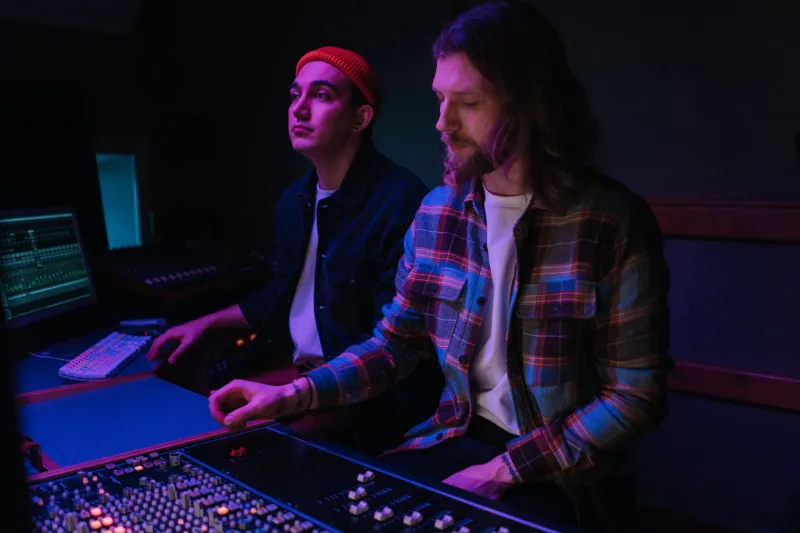
There's a producer in a two-bedroom apartment in Atlanta running a setup that would've cost half a million dollars in 1998. Focusrite interface, studio-grade monitors, a library of plugins that could fill a hard drive twice over. He posts three tracks a week. Nobody's streaming them.
Then there's a kid in Fresno making beats on a cracked version of FL Studio on a laptop with a busted fan. One of her songs just hit two million plays.
Something doesn't add up — until you really think about it.
The Great Gear Illusion
The democratization of music production is one of the genuinely exciting stories of the last two decades. Barriers that once kept bedroom artists locked out of the industry — expensive studio time, gatekeeping engineers, label-controlled distribution — have largely crumbled. Today, a $200 audio interface and a decent pair of headphones can get you surprisingly close to a professional signal chain.
But the flood of accessible tools has created a weird side effect: a massive wave of music that sounds technically competent and emotionally inert. Perfectly tuned vocals. Pristine low-end. Mixes that translate cleanly across every device. And absolutely nothing to say.
"The ceiling for what a home producer can achieve technically has basically disappeared," says Marcus Webb, an independent engineer who's worked with artists across Nashville and Los Angeles. "But the floor for what counts as 'good enough to release' has also disappeared. So now you've got this enormous middle zone of music that sounds fine and means nothing."
When Access Outpaces Artistry
Here's where it gets uncomfortable. For a long time, the argument was that the music industry's gatekeeping system was filtering out great art along with the bad. And that was true. Plenty of brilliant artists never got a shot because they couldn't afford studio time or didn't know the right people.
But removing the gatekeepers didn't automatically solve the artistry problem. It just made it more visible.
Producer and songwriter Dani Reyes, who's worked with independent R&B artists out of Chicago, puts it plainly: "I see people spend six months obsessing over their signal chain and like three hours actually writing. They'll A/B test compressors for a week. But ask them what the song is about, and they'll shrug and say 'the vibe.'"
The vibe isn't nothing. But it isn't enough either.
What separates the Fresno laptop kid from the Atlanta apartment producer — at least in this scenario — isn't the quality of their equipment. It's the relationship they have with the music itself. Constraint, it turns out, can be a creative accelerator. When you only have a few tools, you learn them deeply. You make decisions faster. You commit.
The Plugin Paradox
There's actual psychological research to back this up. Studies on decision fatigue suggest that more choices don't lead to better outcomes — they often lead to paralysis or compromise. In music production, this plays out constantly. Producers with access to 400 plugins spend hours auditioning sounds instead of developing ideas. The search for the perfect snare becomes a substitute for the harder work of figuring out what the song needs.
"I've started limiting myself on purpose," says Webb. "I'll pick five plugins and that's it for the session. It sounds counterintuitive, but the music gets better almost immediately. You stop chasing and start creating."
This isn't a new insight — it's basically the philosophy behind lo-fi as an aesthetic movement. Artists like early Bon Iver, Sufjan Stevens's bedroom recordings, or the entire catalog of early bedroom pop weren't celebrated despite their technical limitations. For a lot of listeners, those limitations were part of the texture, part of what made the music feel human.
What the Memorable Stuff Actually Has in Common
Spend enough time listening across genres and a pattern starts to emerge. The songs that stick — whether they're indie folk, trap, hyperpop, or something without a name yet — share a few things that have nothing to do with production quality.
They have a point of view. Even when the lyrics are abstract, you can feel a perspective behind the music. Someone made specific choices that reflect a specific way of seeing the world.
They have tension and release. Good songs take you somewhere. They build, they shift, they resolve or deliberately refuse to. The arrangement serves an emotional journey, not just a vibe.
And they have identity. You could pick them out of a lineup. That distinctiveness — the weird vocal tic, the unconventional chord choice, the drum pattern that shouldn't work but does — is almost never the result of better gear. It's the result of someone who knows themselves well enough to make choices that are genuinely theirs.
"The artists who break through with budget setups are usually the ones who've spent years figuring out what they want to say," Reyes says. "The gear is almost beside the point. They'd find a way to make it work on anything."
So What Do You Actually Do With This?
If you're a producer or artist sitting in a home studio right now, this probably lands in one of two ways. Either it's validating — you've been making stuff with modest tools and wondering if an upgrade would finally unlock something — or it's uncomfortable, because you've got the setup and you know the missing ingredient isn't a new interface.
Either way, the prescription is the same: put the gear research on pause and spend that time on the harder stuff. Listen to music you love and ask yourself why it works. Write songs that have something at stake. Finish things, even when they're imperfect. Study the artists who built careers on almost nothing — not to romanticize poverty, but to understand what necessity teaches you about commitment.
The tools matter. A decent recording environment makes a real difference. But they're a vehicle, not a destination. The most expensive car in the world doesn't get you anywhere if you haven't figured out where you're going.
Your bedroom studio is fine. The question is what you're bringing into it.