Performing Realness: How Creators Turned Vulnerability Into a Brand Strategy
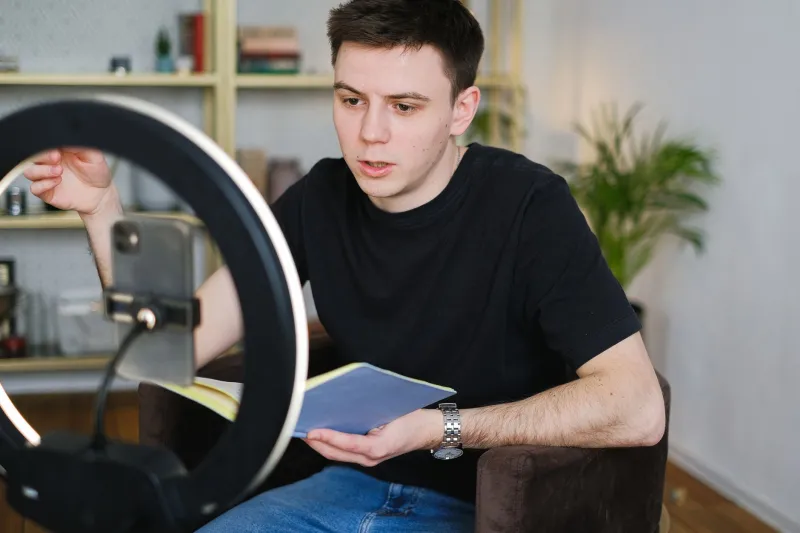
There's a moment you've probably seen a hundred times. A creator sits in their car, no ring light, mascara slightly smudged, voice cracking just enough. They say something like, "I wasn't going to post this, but you guys deserve to know what's really going on." The comments flood in. People feel seen. The video hits a million views by morning.
Now ask yourself: how many takes did that take?
We're living through what might be the most sophisticated era of performed sincerity in entertainment history. The demand for realness — driven by audiences who've grown allergic to corporate gloss — has created something nobody fully anticipated: a new kind of content where vulnerability is the product, and rawness is the aesthetic, not the accident.
The Authenticity Economy
It didn't happen overnight. For years, celebrity culture ran on distance. The more untouchable someone seemed, the more aspirational they became. Then social media blew that model up. Suddenly, the creators who were winning weren't the most polished — they were the ones who felt human.
Audiences responded to confessional YouTube videos, messy Instagram stories, and TikToks filmed in bathroom mirrors. Engagement data confirmed it: raw content outperformed produced content. Platforms algorithmically rewarded intimacy. And just like that, authenticity stopped being a personality trait and became a content format.
Once something becomes a format, it gets optimized. That's just how the attention economy works.
Marketing strategists started studying which confessional beats drove the most shares. Talent managers began coaching clients on how to cry on camera — not whether to, but how. The aesthetic of imperfection (the messy bun, the shaky phone footage, the "I just woke up" energy) became its own highly produced visual language. What looked like someone's worst day was often their most carefully constructed one.
The Audience Knows — And Doesn't Care
Here's where it gets genuinely strange. American audiences are, at this point, pretty media-literate. Most people consuming this content understand, on some level, that what they're watching is curated. They've read the think pieces. They've seen the behind-the-scenes reveals. They know that the crying video was probably filmed three times.
And yet it still works.
That's not hypocrisy — it's something closer to a willing suspension of disbelief, the same mechanism that makes movies emotionally effective even when you can see the boom mic. We know it's constructed. We choose to feel it anyway. The emotional transaction is real even when the spontaneity isn't.
But creators are increasingly aware of this dynamic, which means they're now optimizing for a more sophisticated viewer. It's no longer enough to seem real. You have to seem real in a way that accounts for the fact that your audience knows you might be performing realness. The meta-layers are multiplying.
Some creators have started ironically acknowledging the performance mid-performance — a kind of authenticity inception that somehow reads as more genuine. Others go the opposite direction, doubling down on sincerity so hard it loops back around to feeling calculated. There's almost no move left that isn't, at minimum, adjacent to strategy.
The Psychological Toll Nobody's Talking About
What does it actually do to a person to commodify their own emotional life?
Creators who've spoken publicly about this — and there are more of them every year — describe something that sounds a lot like dissociation. You're going through something genuinely painful, and part of your brain is already framing the shot. You're angry, and somewhere in the back of your mind you're thinking about whether this is postable. Your grief has a potential upload schedule.
Some describe losing track of what they actually feel versus what they've trained themselves to express. When your emotional responses have been monetized long enough, it becomes difficult to locate the version of yourself that exists outside the content. The performance and the person start to blur.
This is distinct from the burnout conversation — though it's related. Burnout is about exhaustion. This is about something more disorienting: an erosion of the boundary between lived experience and content production. When your most honest moments are also your most strategic ones, authenticity stops being a state of being and becomes a skill set.
Can Unfiltered Even Exist Anymore?
The uncomfortable question underneath all of this is whether truly unmediated content is even possible in a monetized attention economy. Every platform has analytics. Every post exists in relationship to previous posts. Every creator, whether they're conscious of it or not, has internalized audience feedback over time and adjusted their behavior accordingly.
Even the creators who swear they never think about metrics have been shaped by them. The ones who went viral for being chaotic learned, implicitly, that chaos has value. The ones who got traction from being earnest learned that earnestness performs. Nobody escapes the feedback loop entirely.
That doesn't mean nothing is genuine. Plenty of creators are telling real stories about real experiences — the strategy and the sincerity aren't mutually exclusive. But the framing, the timing, the platform choice, the thumbnail? Those are never not decisions. And decisions are never fully innocent of audience awareness.
Where Does That Leave Us?
Maybe the most honest thing we can say is this: authenticity, as a concept, was always a little slippery. People have been performing versions of themselves in public forever — long before cameras existed. What's new is the scale, the speed, and the financial stakes attached to how convincingly you can pull it off.
For audiences, the savvier move might be to stop chasing the idea of the totally unfiltered creator and start appreciating something more nuanced — the creator who is genuinely trying, even inside a system that rewards performance. The effort to be honest, even when honesty is also strategic, isn't nothing.
For creators, the reckoning might be less about whether to play the authenticity game and more about finding the edges of it — the moments that belong only to them, that never make it into a caption or a timestamp. Protecting some version of a private self, even a small one, might be the only real resistance left.
Because at the end of the day, the most radical thing a creator can do in the current attention economy isn't to go more raw or more vulnerable or more unfiltered.
It's to keep something back.